 how-to
7 Electrical Maintenance Tasks for Agricultural Facilities
Last Updated: October 26, 2026
Quick Summary
Electrical maintenance for agricultural facilities is the planned testing, inspection and repair of every electrical asset on a working site, from the main switchboard to the pump motor at the back fence. It differs from factory maintenance because equipment sits in dust, moisture and heat, and a single failure can stop a harvest. Sites that treat electrical maintenance as a once-a-year visit spend far more on breakdowns than sites that run a schedule.
- Never reset a tripped safety switch more than once, because a switch that trips again is reporting a real fault.
- Schedule inspections before the busy season, not during it, to prevent most unplanned downtime.
- Rank assets by consequence rather than age, so a pump that stops irrigation outranks an older shed light.
- Test backup generators under real load, not just at idle, and log every test with the date and result.
- Replace a failed motor only after finding the cause, or the new motor will fail the same way.
Table of Contents
- Why Electrical Maintenance for Agricultural Facilities Is Different
- Agricultural Electrical Safety: Hazards to Identify Before You Touch Anything
- Your Farm Electrical Maintenance Checklist, Prioritised
- The Electrical Maintenance Schedule for Farms: A Seasonal Calendar
- Preventive Electrical Maintenance: Testing, Records and Risk-Based Prioritisation
- Motors, Pumps and Irrigation: Where Agricultural Facilities Lose the Most Uptime
- Backup Power and Outage Preparedness for Agricultural Facilities
- Book an Electrical Maintenance Assessment for Your Site
- Frequently Asked Questions
Why Electrical Maintenance for Agricultural Facilities Is Different
Electrical maintenance for agricultural facilities is the planned testing, inspection and repair of every electrical asset on a working site, from the main switchboard to the pump motor at the back fence.
The pattern we see is consistent. Sites that treat electrical maintenance as a once-a-year visit spend far more on breakdowns than sites that run a schedule.
Three things make farms harder on electrical gear than most industrial sites:
- Distance. Pumps, sheds and irrigation runs sit far from the main board, so faults are harder to find and slower to fix.
- Dirt and damp. Dust builds on contacts and moisture gets into enclosures. Together they cause corrosion and tracking.
- Seasonal load. Equipment sits idle for months, then runs flat out. Idle gear fails when it restarts.
The good news is that most of this is predictable. Below, we break down the hazards, a prioritised checklist, a seasonal calendar and the records that keep it all on track.
Agricultural Electrical Safety: Hazards to Identify Before You Touch Anything
Agricultural electrical safety starts with hazard identification, not with tools. A rapid review of electrical hazards on farms as an occupational risk by Latham and colleagues (2025) examined how these hazards contribute to farm injury and fatality, which is reason enough to treat identification as step one.
Look for these, in this order:
- Overhead powerlines. Check clearance above augers, grain augers, tip trucks and irrigators. Machinery contact with lines is a leading cause of serious farm electrical incidents.
- Damaged leads and plugs. Cracked insulation, taped joins and missing earth pins.
- Water near power. Pumps, wash-down areas and irrigation controllers with water pooling at the base.
- Dust build-up. Thick dust on switchboards, motors and ventilation fans traps heat and can ignite.
- Aging wiring. Cloth or perished insulation, and circuits added over decades with no drawings.
- Missing RCD protection. Residual current devices, or safety switches, may be absent on older circuits.
Watch out: never reset a tripped safety switch more than once. A switch that trips again is reporting a real fault, and repeated resetting is how people get hurt.
Your Farm Electrical Maintenance Checklist, Prioritised
A farm electrical maintenance checklist works best when it is ordered by risk, not by convenience. The items below are ranked so the highest-consequence failures get checked first.
| Priority | Check | Pass criteria | If it fails |
|---|---|---|---|
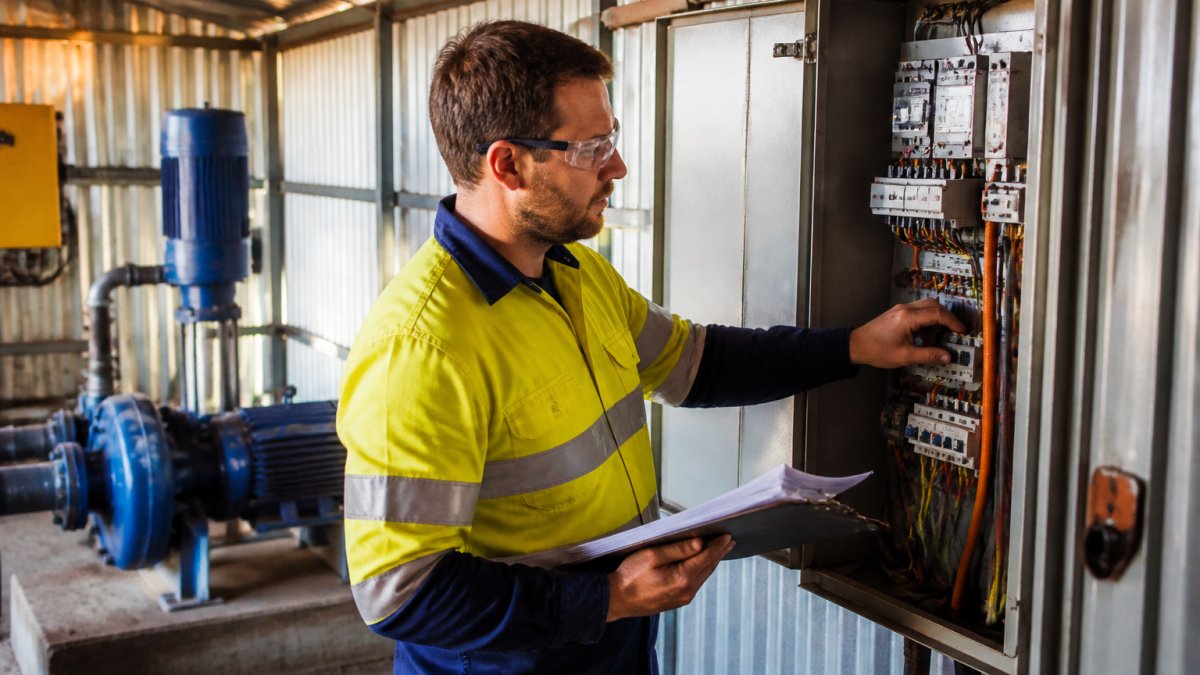
| 1 | Safety switches (RCDs) | Trips when tested at the button | Stop. Book a licensed electrician |
| 2 | Overhead line clearance | No machinery or growth within safe distance | Re-route work or call the network operator |
| 3 | Switchboard condition | Dry, sealed, no dust, no scorch marks | Isolate and book an inspection |
| 4 | Leads, plugs and outlets | No cracks, no tape, earth pins intact | Tag out and replace |
| 5 | Motors and pumps | Clean, cool, no unusual noise or smell | Book servicing |
| 6 | Earthing and bonding | Connections tight, no corrosion | Licensed electrician only |
What You Can Check Yourself vs What Needs a Licensed Electrician
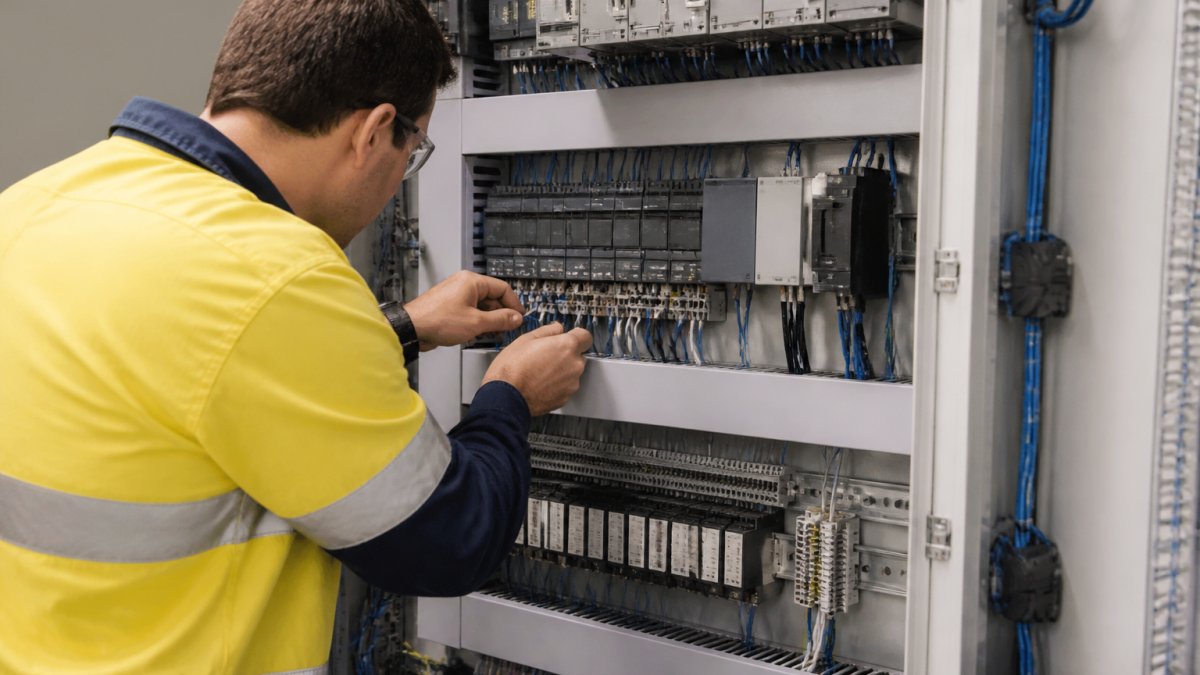
You can safely do a visual walk-around, test safety switches at the button, keep gear clean and dry, and log what you find.
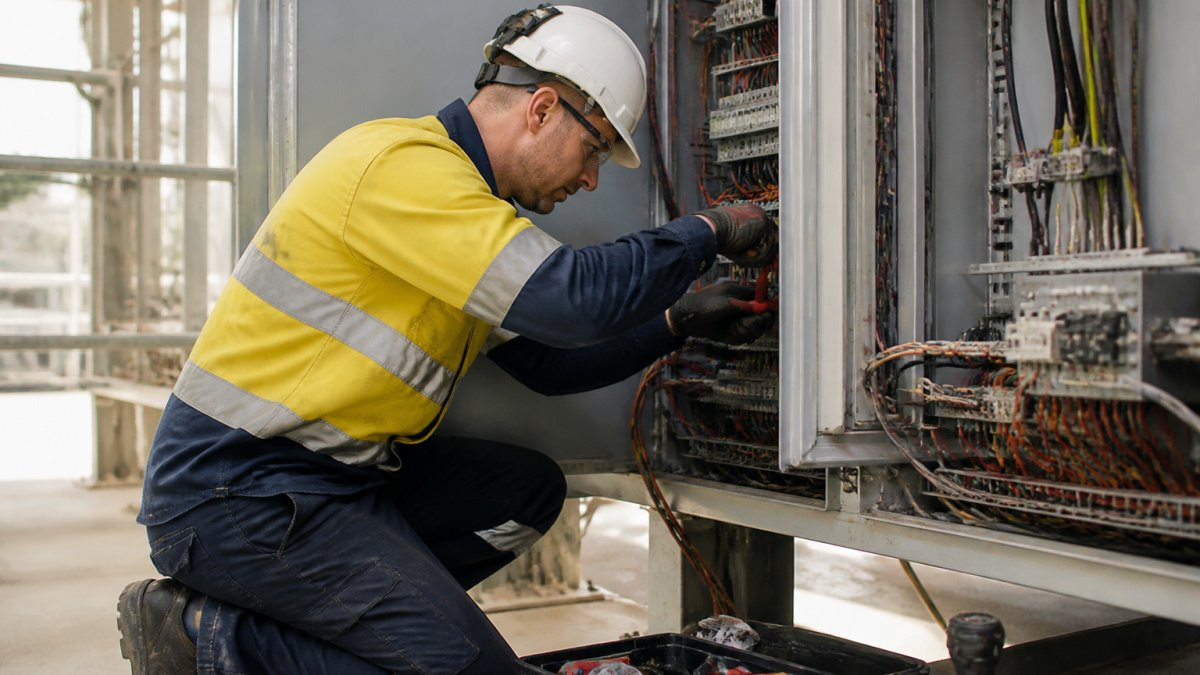
Everything else needs a licensed electrician. That includes opening switchboards, testing circuits, repairing wiring, replacing outlets and any work on fixed equipment.
If you decide you need support, you can review the electrical services available for industrial sites to see what a proper maintenance program covers.
The Electrical Maintenance Schedule for Farms: A Seasonal Calendar
An electrical maintenance schedule for farms should follow the work calendar, not the other way around. Schedule inspections before the busy season, not during it. That single change prevents most unplanned downtime.
| Period | Trigger activity | Electrical tasks | Pass criteria |
|---|---|---|---|
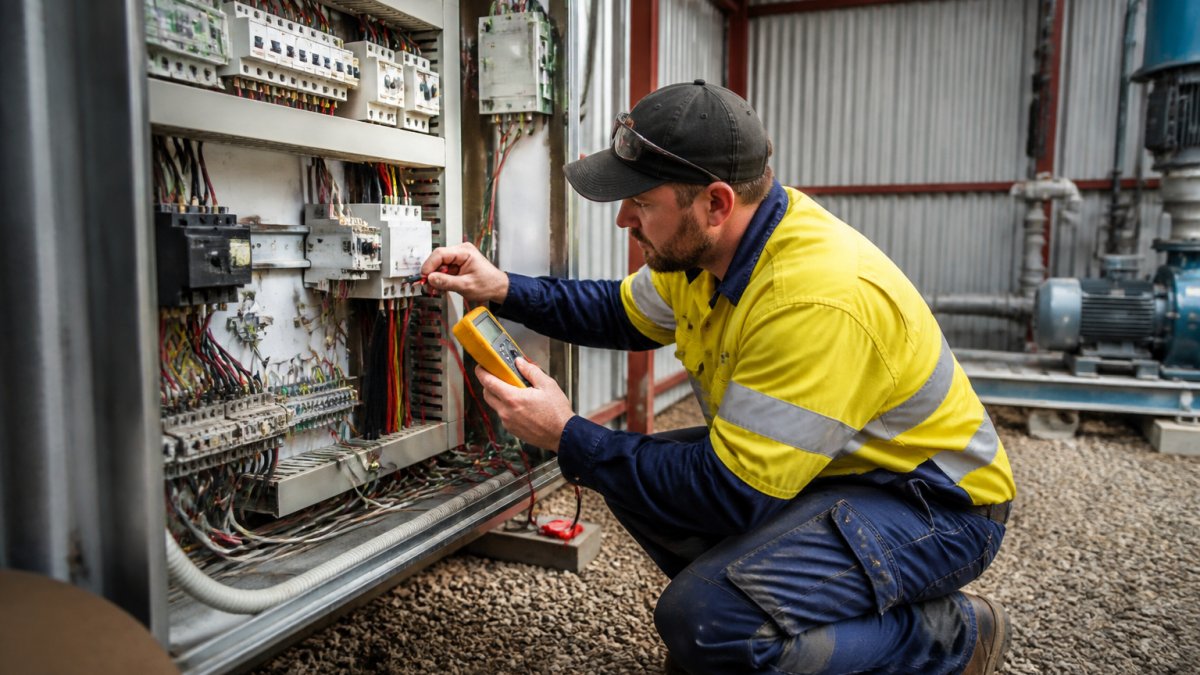
| Late winter - early spring | Irrigation restart | Restart checks on idle pumps and controllers; megger test motor windings before first run; test all safety switches; inspect irrigation controller enclosures for moisture and insect nests | Windings clear of moisture; every RCD trips at the button; enclosures dry and sealed |
| Spring | Irrigation at full load | Thermographic scan of main switchboard and pump starters; check terminal tightness on vibrating equipment; clear vegetation from overhead lines and poles | No hot spots on scan; terminals tight; line clearance maintained |
| Late spring - early summer | Pre-harvest preparation | Full inspection of harvest circuits, augers, conveyors and grain-handling motors; test and tag portable leads and tools; check changeover switch and generator under load | All circuits tested; portable gear tagged; generator transfers under real load |
| Summer (harvest) | Peak load | Visual walk-around only; log faults and defer non-urgent repairs; keep switchboards clean and doors closed | No new hazards introduced; faults logged for post-harvest |
| Autumn | Load drops after harvest | Service pumps and irrigation controllers; clean switchboards after the dusty season; replace failed components found during harvest; review fault log | Switchboards dust-free; pump service completed; fault log closed out |
| Winter | Wet season, idle gear | Check moisture ingress in sheds and enclosures; test backup generators under load; inspect earthing and bonding for corrosion; restart-check equipment before spring | Enclosures dry; generator tested; earth connections sound |
Two rules make the calendar work in practice. First, book the electrician before the trigger activity, not after it, a pre-season inspection that happens during harvest is worthless. Second, log every task with the date and result, so next year's calendar is built on evidence rather than memory.
The logic is simple. Equipment that has sat idle is the most likely to fail on the first hot day. Test it before you need it, and schedule the test against the season that will load it hardest.
Preventive Electrical Maintenance: Testing, Records and Risk-Based Prioritisation
Preventive electrical maintenance is scheduled work done before a fault occurs, and its value depends entirely on record-keeping. Without records, you cannot tell whether maintenance is working, which assets are costing you money, or which ones are close to replacement.
Build an asset register first
Keep one register for every electrical item on site. A spreadsheet is enough. For each asset, record:
- ID and location, a unique tag (for example, PUMP-03, SHED-2-BOARD) and where it sits
- What it feeds, the circuit, process or stock it supports
- Age and condition rating, a simple 1-5 scale, where 1 is new and 5 is end-of-life
Rank assets by consequence, not by age
Criticality ranking is what turns a register into a maintenance plan. Score each asset on two axes: how likely it is to fail, and how much it hurts when it does. A pump that stops a whole irrigation run outranks a shed light, even if the light is older.
A simple three-tier ranking works for most sites:
- Critical, failure stops production, endangers livestock or spoils stock. Inspect and test on the shortest interval, and hold a spare or a documented contingency.
- Important, failure causes disruption but not loss. Standard scheduled testing.
- General, failure is an inconvenience. Visual checks and test-and-tag on the normal cycle.
Spend your maintenance budget where failure hurts most, and let the ranking, not the calendar alone, decide what gets attention first.
Set pass/fail thresholds
A checklist is only useful if the inspector knows what acceptable looks like. Agree thresholds in advance so the decision to stop work is not made under pressure:
- Safety switches (RCDs), must trip when tested at the button. A device that does not trip is a fail; isolate the circuit and book a licensed electrician.
- Insulation resistance, record the measured value at each test and compare against the previous result. A downward trend matters as much as a single low reading.
- Switchboard condition, pass if dry, sealed, dust-free and free of scorch marks; fail on any moisture, vermin ingress or discolouration.
Keep the records audit-ready
Testing and tagging of portable equipment, RCD testing and thermographic checks on switchboards all belong on the schedule, and each should leave a dated record.
A register plus a fault log plus dated test results gives you three things competitors rarely mention: a repair-versus-replace decision made on evidence, a clear picture of which assets are nearing end of life, and a defensible record if an incident or audit ever asks what you did and when.
Motors, Pumps and Irrigation: Where Agricultural Facilities Lose the Most Uptime
Motors, pumps and irrigation systems cause more unplanned downtime on farms than any other electrical asset. They run in wet, dirty conditions, often unattended, and they fail without warning when neglected.
The common failure points are predictable:
- Moisture in motor windings after idle periods
- Loose terminal connections caused by vibration
- Blocked ventilation from dust and insect nests
A common mistake is replacing a failed motor without finding out why it failed. If the cause was moisture or overload, the new motor will fail the same way.
Backup Power and Outage Preparedness for Agricultural Facilities
Backup power is only useful if it starts when needed, and most generators fail at exactly that moment. The reason is almost always the same: nobody tested them under load.
Treat generators as part of your electrical maintenance schedule:
- Run them under real load, not just at idle, on a set interval
- Check fuel, coolant and battery condition each run
- Test the changeover switch so the site actually transfers
For facilities with cold storage, milking or continuous processes, an outage has a cost that grows by the hour. A generator that has been tested is the difference between a minor interruption and a major loss.
Book an Electrical Maintenance Assessment for Your Site
The hardest part of electrical maintenance is not knowing what to do.
Industry Power Solutions provides industrial automation and tailored electrical services for commercial and industrial sites, from PLC programming and custom control systems to full electrical installations and maintenance.
If your switchboard is aging, your documentation is thin, or an audit has flagged your infrastructure, we can assess the site and give you a clear picture of what needs attention first.
Get in touch to arrange a site assessment and put a maintenance schedule in place before the next season catches you out. You can contact our team to discuss your site and book a time.
Frequently Asked Questions
How often should electrical equipment on a farm be inspected?
Most agricultural sites need a two-tier approach. A visual check of switchboards, outlets, leads and pump controls should happen monthly, and before and after each seasonal peak. Formal inspection and testing by a licensed electrician should run annually at minimum, and more often for dusty or wet areas such as feed sheds and pump houses. Anything showing heat damage, moisture ingress or repeated tripping needs immediate attention rather than waiting for the next scheduled visit.
What should an agricultural electrical maintenance checklist include?
A practical farm electrical maintenance checklist covers switchboards and panels (dust, moisture, vermin, labelling), residual current devices and their test buttons, wiring and outlets for damage or corrosion, motor and pump terminals, irrigation controls, overhead powerline clearances, and earth connections. Add testing and tagging of portable equipment, thermal checks on connections, and a record of every fault and repair. Give each item a pass or fail result so nothing gets logged as fine without evidence.
Who is qualified to carry out electrical maintenance on farm equipment?
In Australia, fixed wiring, switchboards, repairs and installation work must be done by a licensed electrical contractor, and the work needs a certificate of electrical safety. Owners and staff can do visual checks, keep equipment clean and dry, test RCD push-buttons and report faults. Anything involving opening a panel, testing circuits or replacing components belongs with a licensed electrician. Using unlicensed labour risks shock, fire and voided insurance cover.
How can preventive electrical maintenance reduce downtime on a farm?
Preventive electrical maintenance finds the faults that cause breakdowns before they stop production: loose connections that build heat, moisture in motors, dust-clogged ventilation and aging wiring. A rapid review of electrical hazards on farms by Latham et al. (2025) treats electrical faults as a recognised contributor to farm injury and fatality, which is why scheduled inspections matter. Pairing a maintenance schedule with an asset register lets you prioritise the pumps and panels that cost the most per hour of downtime.