 how-to
Industrial Electrical Panel Upgrade Benefits: A 2026 Guide
Table of Contents
- Why Industrial Electrical Panel Upgrade Benefits Matter More Than Ever
- Improved Electrical Safety and Reduced Overload Risk
- Electrical Panel Capacity Upgrade: Room for Motor Loads and New Machinery
- Industrial Switchboard Upgrade and Protection Choices
- Industrial Electrical Safety Inspection and Compliance
- Electrical Panel Upgrade Cost, Payback and Lifecycle Economics
- Planning the Upgrade: Load Assessment, Shutdowns and Commissioning
- Conclusion
- Frequently Asked Questions
Last Updated: October 19, 2026
Why Industrial Electrical Panel Upgrade Benefits Matter More Than Ever
An industrial electrical panel upgrade delivers safer fault protection, more usable capacity and fewer unplanned shutdowns. For plant managers, the case is simple: aging switchgear is the most common cause of the outages that stop production.
Most facilities do not decide to upgrade because a consultant told them to.
That is the point where good advice matters. A panel upgrade is not a swap of one box for another. It is a redesign of how power moves through your plant.
Below, we break down what each benefit actually looks like on the floor, what drives cost, and how to plan the work without losing a shift.
Improved Electrical Safety and Reduced Overload Risk
Safety is the first benefit, and the one that justifies the spend on its own. An old board with tired breakers cannot clear a fault fast enough. That raises fire risk and arc flash danger for anyone working near it.
Fault protection is the core issue. Modern breakers and protection relays detect a short circuit or earth fault in a fraction of the time older gear needs. Faster clearing means less heat, less damage and less danger.
Watch for these warning signs of an overloaded board:
- Breakers that trip under normal peak load
- Warm panel doors or a smell of hot plastic
- Discoloured wiring or scorch marks at terminals
- Fuses blowing repeatedly on the same circuit
- A board with no spare ways left
Grounding and wiring condition matter just as much. A board can pass a visual check and still have poor earth continuity. That is a fault path waiting to fail.
Electrical Panel Capacity Upgrade: Room for Motor Loads and New Machinery
Capacity is the benefit plant managers feel fastest. An electrical panel capacity upgrade gives you spare ways, higher breaker capacity and headroom for new machinery.
Here is the trap. Most boards were sized for the plant as it was built, not as it grew.
A proper load calculation tells you where you stand. It compares your actual load demand against the board's rating, not against what someone assumed years ago.
What extra capacity unlocks:
- Spare circuits for future expansion
- Correctly sized protection for high-inrush motor loads
- Room for three-phase power connections on new lines
- Better balance across phases, which cuts losses
- Space to separate critical and non-critical circuits
That last point is underrated. Splitting essential loads from general power lets you keep production running during maintenance on one section. It is a small design choice with a big operational payoff.
Industrial Switchboard Upgrade and Protection Choices
Protection choices decide how well the upgrade performs over its life. An industrial switchboard upgrade is where you select the switchgear, breakers and relays that will carry the plant for the next two decades. Most competitors stop at "modern breakers are better." The useful detail is in the ratings and coordination study behind the selection.
The main decision is between maintaining existing gear and replacing it. Patching an old board is cheaper today. It rarely stays cheaper for long, because legacy components become harder to source and the protection settings drift from what the plant actually draws.
What to weigh:
- Equipment lifespan: aging gear fails more often and parts get harder to source
- Fault protection: modern relays give better discrimination between circuits
- Maintenance costs: old gear needs more preventive maintenance and more downtime
- Spare parts: legacy components can mean long waits for replacements
Ratings that actually matter
Three numbers drive most of the design:
- Fault-current rating (kA): the board and breakers must withstand the prospective short-circuit current at that point in the installation. If the available fault level has risen since the board was built, common when the utility upgrades a transformer, the existing gear may be under-rated even if it still works.
- Arc-flash energy: protection settings and clearing times determine the incident energy a worker could be exposed to. Faster clearing and correctly set relays reduce the hazard category, which affects safe work procedures and PPE requirements.
- Selective coordination: the goal is that a fault on one machine trips only that circuit, not the main incoming breaker. Good discrimination protects power reliability every time something goes wrong; poor coordination turns a single motor fault into a plant-wide outage.
A coordination study is the document that proves this. It models the time-current curves of every protective device and confirms the settings will isolate the smallest possible section. Ask for it as a deliverable, not an afterthought.
Switchgear forms and segregation
For industrial boards, the physical form of the switchgear matters as much as the electrical ratings. Form segregation (the degree to which busbars, functional units and terminals are separated) determines whether you can work on one section while the rest stays live. Higher forms cost more but reduce maintenance downtime and improve safety during intervention.
Control panel and automation interfaces belong in this conversation too. If the board feeds PLC-driven lines, the protection design should match how those lines actually run, including start-up inrush from drives and large motors, which is often the event that trips an under-sized breaker.
Industrial Electrical Safety Inspection and Compliance
Compliance is not optional, and it is where many facilities get caught out. An industrial electrical safety inspection tests the real condition of your electrical system, not just how it looks.
In practice, that means testing insulation resistance, earth continuity, circuit protection and thermal performance under load. A thermal scan often finds hot joints that no visual check would catch.
Electrical code compliance sits behind all of this. Work on industrial installations must meet the current standard, and that standard has moved on from what many older boards were built to.
Plan for these steps:
- Book a full inspection before you commit to a scope
- Get the findings in writing, with photos and test results
- Confirm permitting requirements with your local authority
- Keep inspection records for auditors and insurers
- Re-inspect after commissioning, not just before
If you are mid-audit, the inspection report is your evidence. Get it right and the compliance conversation gets much shorter.
Electrical Panel Upgrade Cost, Payback and Lifecycle Economics
Electrical panel upgrade cost is driven by scope, not by the box itself. The board is often the smallest line item. Labour, shutdown planning, cable work and testing usually dominate. Competitors list the same drivers and stop; the useful part is the framework for turning those drivers into a payback case.
Cost drivers to expect:
- Switchgear and protection equipment selection
- Cable and wiring replacement or re-routing
- Installation labour and after-hours work
- Testing and commissioning
- Temporary power or production rescheduling
- Permitting and inspection fees
We do not publish fixed prices, because a board that suits one plant is wrong for the next. Pricing depends on your load demand, the gear selected and how much work happens outside production hours. Talk to us for a scoped quote.
Building the payback case
Payback rarely comes from energy savings alone. It comes from three places, and each can be estimated before you commit:
- Avoided unplanned downtime: count nuisance trips and outage hours over the last 12 months, multiply by the cost of lost production per hour. A board that trips twice a month is a measurable annual loss, not an annoyance.
- Lower maintenance costs: compare the annual spend on patching, emergency call-outs and hard-to-source parts against the expected maintenance profile of new gear.
- Avoided fault losses: a single fault that takes out a whole line, rather than one circuit, can dwarf the upgrade cost. Selective coordination is the design choice that caps that exposure.
A simple pattern most practitioners use: total the three avoided-cost lines over a realistic horizon (often five to ten years), then compare against the scoped upgrade cost plus the residual value of the old gear. If the avoided costs exceed the net cost within your acceptable payback window, the case is made.
Lifecycle economics, not just first cost
Lifecycle economics favour the upgrade when you count downtime. Old gear carries three ongoing costs that new gear reduces: higher failure frequency, longer fault-finding time (undocumented boards are the worst offender), and rising spare-parts lead times. Add the operating costs of patching old gear and the case usually makes itself.
What to ask for in a quote
To compare quotes fairly, ask each supplier to break out equipment, labour, testing and commissioning, temporary power, and permitting separately. A single lump sum hides the scope differences that decide whether the payback case holds.
Planning the Upgrade: Load Assessment, Shutdowns and Commissioning
Planning separates a smooth upgrade from a painful one. The sequence is system assessment, design, shutdown planning, installation, commissioning and handover.
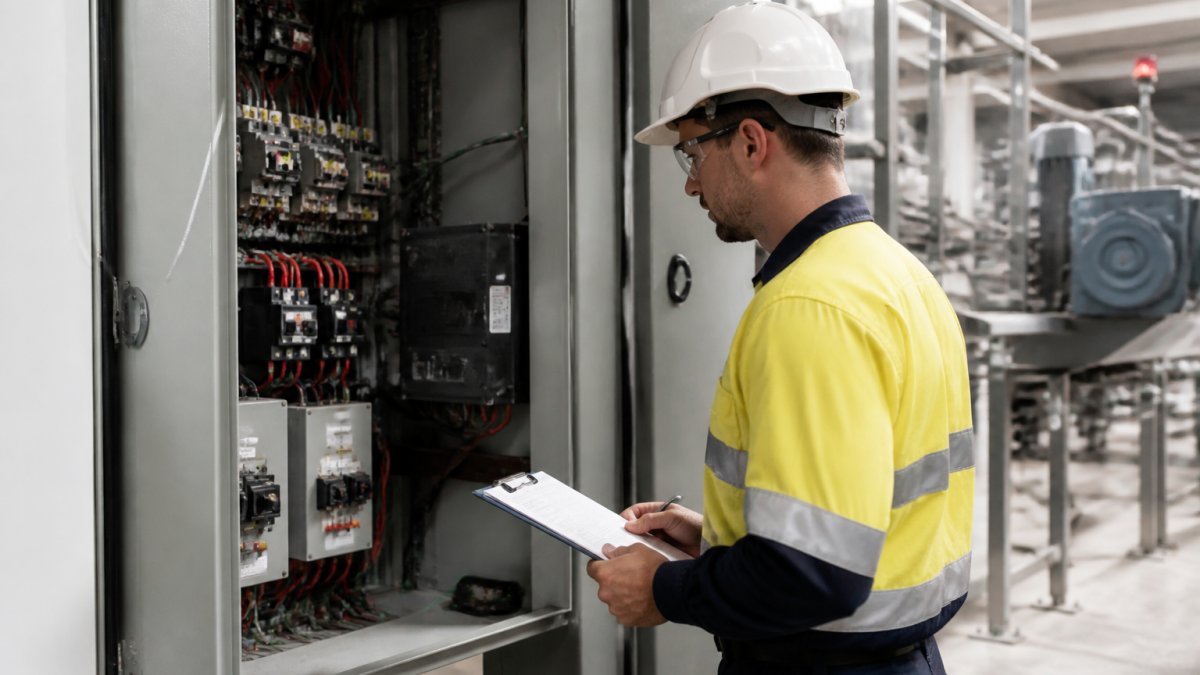
Start with a capacity planning exercise. Log actual load demand over a full production cycle, including peak load during start-ups. That data sizes the board correctly and exposes any phase imbalance.
Then plan the shutdown. Options include:
- A full outage during a scheduled break
- A staged changeover, section by section
- Temporary power to keep critical loads live
Commissioning is where you prove the work. Test protection settings, confirm discrimination, run thermal checks under load and document everything.
At Industry Power Solutions, we handle load assessment, protection design, installation and commissioning as one scope, so nothing falls between trades.
Conclusion
The real challenge is not choosing a board. It is planning the upgrade so production keeps running while the work gets done.
That is where Industry Power Solutions comes in. Our team handles industrial automation, custom control systems and full electrical installations, from design through to maintenance. We work with legacy equipment and existing setups, and we scope the job around your shutdown windows.
Get started with Industry Power Solutions and build an electrical system that keeps your plant running.
Frequently Asked Questions
How do you know when an industrial electrical panel needs upgrading?
Warning signs include frequent breaker trips, an electrical panel that runs hot or buzzes, rust or scorch marks inside the enclosure, and spare capacity that cannot support new machinery. If your load demand has crept close to breaker capacity, or a safety inspection has flagged non-compliance, it is time for a proper system assessment. An electrician can run a load calculation and check whether the existing panel still meets the standard your production equipment needs.
How long does an industrial electrical panel upgrade take?
Timing depends on the size of the panel, whether switchgear and cabling must be replaced, and how much production must keep running during the work. A straightforward panel swap in a small facility can be done over a weekend shutdown, while a full industrial switchboard upgrade with new motor loads and commissioning can take several weeks of staged work. Careful shutdown planning and staged changeover keep unplanned downtime to a minimum.
What does an electrical panel upgrade cost for an industrial facility?
Electrical panel upgrade cost varies widely with the current rating, the number of circuits, whether switchgear and transformers are included, and the labour needed to work around production. Pricing also depends on access, cable runs and testing requirements. Rather than rely on a generic figure, ask for a site assessment and a written quote that separates equipment, installation and commissioning so you can compare options and plan capex.
Can a panel upgrade reduce industrial downtime?
Yes. An aging panel with tired breakers and loose connections is a common cause of nuisance trips and unplanned downtime. Replacing it with correctly rated protection, proper grounding and modern switchgear reduces fault risk and makes power interruptions easier to isolate. New monitoring and control options also help maintenance teams spot problems before they stop a production line, which supports preventive maintenance and protects equipment lifespan.